Multicasting
suggest changeMulticasting is a form of datagram delivery. Unlike a unicast datagram, it is not addressed to one client; it is sent to a multicast IP address, and every subscribed client can receive the message.
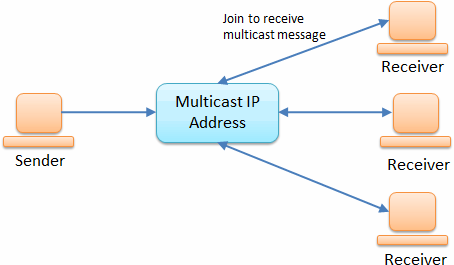
Example code for a server side:
public class Server {

    private DatagramSocket serverSocket;

    private String ip;

    private int port;

    public Server(String ip, int port) throws SocketException, IOException{
        this.ip = ip;
        this.port = port;
        // socket used to send
        serverSocket = new DatagramSocket();
    }

    public void send() throws IOException{
        // make datagram packet
        byte[] message = ("Multicasting...").getBytes();
        DatagramPacket packet = new DatagramPacket(message, message.length,
            InetAddress.getByName(ip), port);
        // send packet
        serverSocket.send(packet);
    }

    public void close(){
        serverSocket.close();
    }
}
Example code for a client side:
public class Client {

    private MulticastSocket socket;

    public Client(String ip, int port) throws IOException {

        // important that this is a multicast socket
        socket = new MulticastSocket(port);

        // join by ip
        socket.joinGroup(InetAddress.getByName(ip));
    }

    public void printMessage() throws IOException{
        // make datagram packet to receive
        byte[] message = new byte[256];
        DatagramPacket packet = new DatagramPacket(message, message.length);

        // receive the packet
        socket.receive(packet);
        // getData() is the whole buffer, including unused trailing bytes; getLength() is the received size
        System.out.println(new String(packet.getData()));
    }

    public void close(){
        socket.close();
    }
}
Code for running the Server:
public static void main(String[] args) {
    try {
        final String ip = args[0];
        final int port = Integer.parseInt(args[1]);
        Server server = new Server(ip, port);
        server.send();
        server.close();
    } catch (IOException ex) {
        ex.printStackTrace();
    }
}
Code for running a Client:
public static void main(String[] args) {
    try {
        final String ip = args[0];
        final int port = Integer.parseInt(args[1]);
        Client client = new Client(ip, port);
        client.printMessage();
        client.close();
    } catch (IOException ex) {
        ex.printStackTrace();
    }
}
Run the Client First: The Client must subscribe to the IP before it can start receiving any packets. If you start the server and call the send() method, and then make a client (& call printMessage()). Nothing will happen because the client connected after the message was sent.
Found a mistake? Have a question or improvement idea?
Let me know.
Table Of Contents